
Life is made up of wonderful encounters, inspiring people we admire and who make us see life differently. When these people are willing to answer your questions and give you plenty of advice, it gives...
✨ jaiio's BEAUTIFUL ENCOUNTERS ✨
And for this launch, we are extremely proud to have with us… An author and journalist for 15 years for Le Parisien. A successful blogger, she dedicated her latest book, The Dressing Code, to our dressing room. Charlotte Moreau, alias Balibulle, answers our questions and gives us all his (very wise) advice to make your wardrobe reflect your personality! How to sort your wardrobe? What are the essentials of a wardrobe? What is an ideal wardrobe? ...
Tell us a little about yourself?
"I'm Charlotte Moreau. I'm the author of the wardrobe management method, The Dressing Code, published in September 2019. It's an extension of my blog Balibulle, which I've been running since 2006. My first book was The Antiguide to Fashion. The next one will have a more documentary approach; it will be a beautiful book that will have nothing to do with clothing. I live in the Paris region with my partner, our two daughters, and our Carla. I trained as a journalist; I was a reporter for almost fifteen years for Le Parisien."
When did you get into the fashion world?
"I became interested in fashion quite late because I'm from the suburbs and because I was very much a tomboy throughout my adolescence and high school. There was a first aesthetic shock when I started my studies at CELSA and then at Assas, in Paris. That's where I discovered Parisian women and especially the students from the 6th arrondissement. It fascinated me and the spark came from there. Then there was a second milestone, the creation of my fashion blog. I was already 25/26 years old, I was working in an editorial office. So I had infused all these aesthetic influences: Paris, reading Elle (before, I read 20 ans). It happened quite gradually, quite late and the blog finally came to respond to a form of isolation since I had almost no one in my circle of friends with whom I could talk about fashion, what I wanted in magazines or looking at girls in the Street.
I think it's really important in building my relationship with clothes that it started not by being interested in my own clothes but in what was in magazines and what other girls were wearing. It led me to do a kind of exploration of my whole environment before really asking myself questions about myself and what I wanted.
I wanted to. It took me a while, but I got there at almost 40."
What is the Dressing Code?
"The Dressing Code, I wanted it to be a book of practical advice but not style advice because there are already a lot of very good ones. But also because what I needed when I started to feel this excess of clothes in my life, in my closet, in my head; it was advice not aesthetic but practical to succeed in making my life and my closet coincide. I did not find any for several years. So I shared this inner journey on my blog and then I was able to draw some tools from it and finally form a method at the origin of this book. I invite each reader to question their emotional relationship with clothes, to understand how they buy, why they have difficulty sorting, to determine if you have a more emotional or more pragmatic relationship with clothes.There are a whole bunch of introspection tools that channel you towards what makes up your daily life. It's by starting from there that you will succeed in understanding what you need to find in the morning when you open the door to your closet. This often has absolutely nothing to do with our inspirations, our influences but rather with our life, the care, the quality that we want to bring to the way we dress on a daily basis."
The perfect wardrobe?
"The perfect wardrobe, for me, is not a wardrobe in which nothing is missing but rather one in which there is nothing in excess because I truly believe that a wardrobe is alive and dynamic, that it adapts to life changes and that it accompanies us throughout our existence. To be effective, it must meet our needs and our changes and therefore inevitably there will always be something missing. If you move, if you change jobs, if you change means of transport, if you have children one day, if you become very ill, if you radically change your figure; these are all profound changes that will impact your clothes.
The perfect wardrobe cannot be frozen at a given moment, it is neither something frozen in time nor something complete, in the sense that we would have made a list of everything we need. There are always things missing from a perfect wardrobe, either that we no longer have or that we do not have yet, and that is quite normal! On the other hand, to approach the idea of perfection, there must not be unused or excess clothes.
Wardrobe essentials?
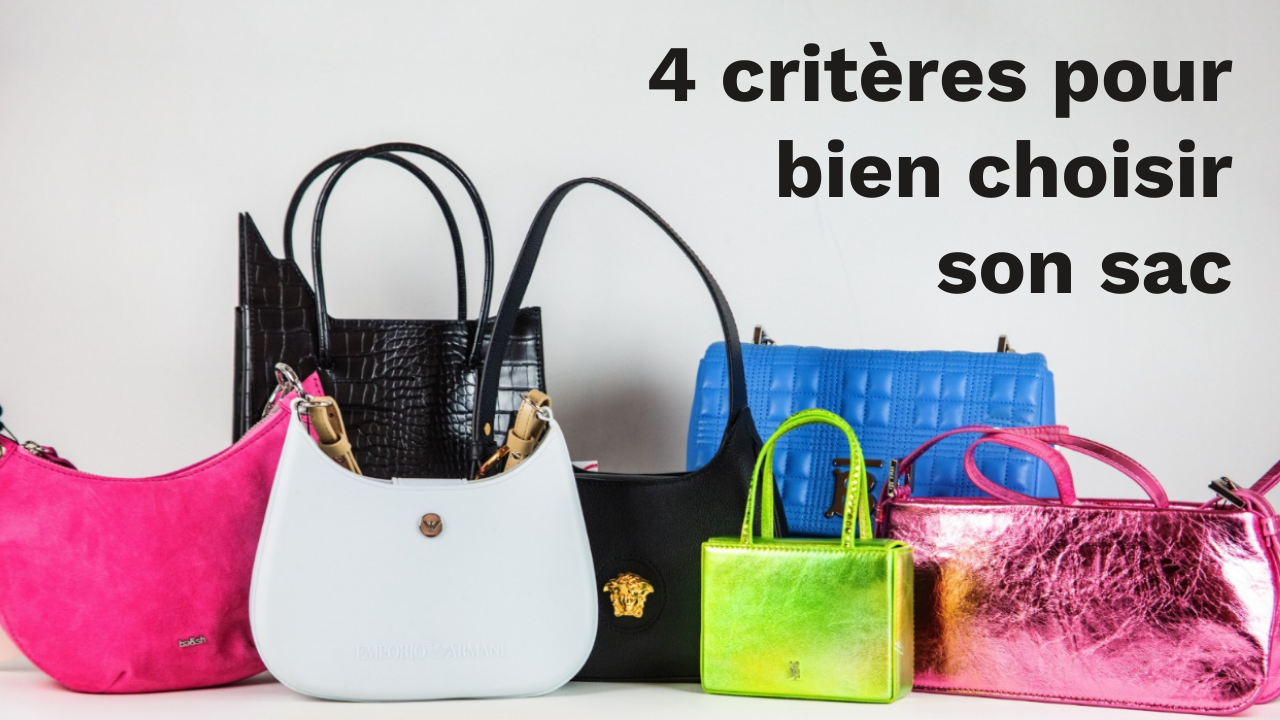
"First of all, a hands-free bag: in terms of ergonomics, this is really the first box to tick! It will always be useful to you. After the format and capacity, it depends on each person, but it can be a small, rigid shoulder bag or a large, slightly soft satchel, also worn over the shoulder. It can also be a bum bag, a backpack, but the idea is that you don't have to carry something at the elbow like an iconic Hermès it-bag or an evening clutch, for example.
2nd essential: a coat that does the job. By that I mean something covering and structured that gives a good look and that does everything even if what you wear underneath isn't great! It smells of the experience of the mother who bursts into the school gates at 8:20 a.m. and who doesn't always hear the alarm ringing... For me, in winter it will be a wool pea coat with a very large, stiff collar that immediately brings a kind of neatness that I'm looking for. Long enough to wrap yourself in it. You also need a mid-season equivalent, a light jacket or a trench coat, if you wear one. But it can also be a printed jacket with work on the sleeves. The idea is that this overcoat is sufficient in itself in a way."
2 reasons to buy second-hand?
"Second-hand, today, can also and often mean new with tag or new, never worn. Fortunately or unfortunately... I started buying on Ebay more than fifteen years ago and it was already the case at that time but not as much as today. If you are more of a fan of new clothes and you are not necessarily looking for a garment that already has a life, a patina, if vintage does not speak to you; second-hand can also meet certain needs whether they are economic or (and here I come to the second good reason to buy second-hand) whether it is linked to the influx of new items, to the turnover in stores which sometimes leads us to identify very promising pieces for our wardrobe but which are too quickly sold out.We all need to acquire this new reflex of telling ourselves that it's not over, that we might find it again in a few months or a few years!
These are two good reasons, and not the least, to buy second-hand! I repeat myself again, but it's not only for people who make it a matter of principle and who only buy like that. You don't have to be radical to be interested in second-hand goods; it can be very occasional, and everyone goes at their own pace and according to their needs."
Your advice for sorting out your wardrobe?
"It's important to identify the right times for a sorting phase because it's something that requires a lot of energy! Naturally, when the seasons change or when we go back to school in September and January, we have this energy that is there but we also have lots of other things to manage at the same time! So you shouldn't put pressure on yourself and tell yourself that in 3 hours one afternoon, it will be sorted. A good sorting is generally done gradually because you have to let go of certain clothes one after the other and for some, that can be a block. It really depends on your way of functioning and the emotional relationship that you have or don't have with your clothes. You have to expect to do it in several stages and always keep in mind the idea that your wardrobe is not made up of individual items of clothing but of outfits, of entire silhouettes. To start seeing things clearly and removing the superfluous, you have to think by outfit. You don't take out the clothes that you don't know what to do with or that you have questions about but on the contrary, those on which you have no doubt, the outfits that work. You have to put them together on a rack or on a piece of furniture and the sorting will be done with what is left in the closet and which is not part of your favorite outfits. In the Dressing Code, I recommend leaving them aside for a while to see if you can do without them without problem. You have to give time to time because sorting is not only a matter of determination, energy; it is also a matter of emotion. So it can take time, do not put pressure on yourself and do it calmly, in several times. You must try to do it at the beginning and end of each season. You will see that sorting is like a muscle, once you have started this dynamic, that you do it regularly, it will become a reflex.
Your motto?
"It's perhaps more of a concept that I develop in the Dressing Code, that of the golden triangle. It's the idea that an effective wardrobe, an effective garment that meets your needs; it meets both requirements of comfort, aesthetics and requirements of cohesion with your lifestyle. Too often, we tend to over-equip contexts of our life that are extremely specific; to have a sort of divergence between the lived self, marked by everyday life, routine, banality sometimes and this dreamed sartorial self which is often a little more glamorous, with somewhat status pieces that ultimately spend their time on hangers.
Wouldn't it be worth it, on the contrary, to put more care and more budget into these everyday clothes that accompany us to face each day? Because that's where everything ultimately comes down to, it's not on one or two evenings or one or two dates in the year, it's on daily life!"
And the last word?
"We're definitely on a hair explosion for the end of this interview. I had to redo my hair about 8 times during the questions, it must be obvious.
Thanks to Aurélie and
Thank you very much for your attention, thank you again very much girls for the interview and see you next time!"
To discover without delay!
- Charlotte Moreau's book, published since October 12, 2021 in paperback? here
- His blog? https://www.balibulle.com/
- His insta? @charlottemoreaubalibulle
Did you like these tips?
👉 You will like that too!
🧘♀️ And to effortlessly sell what you no longer wear, It's here!